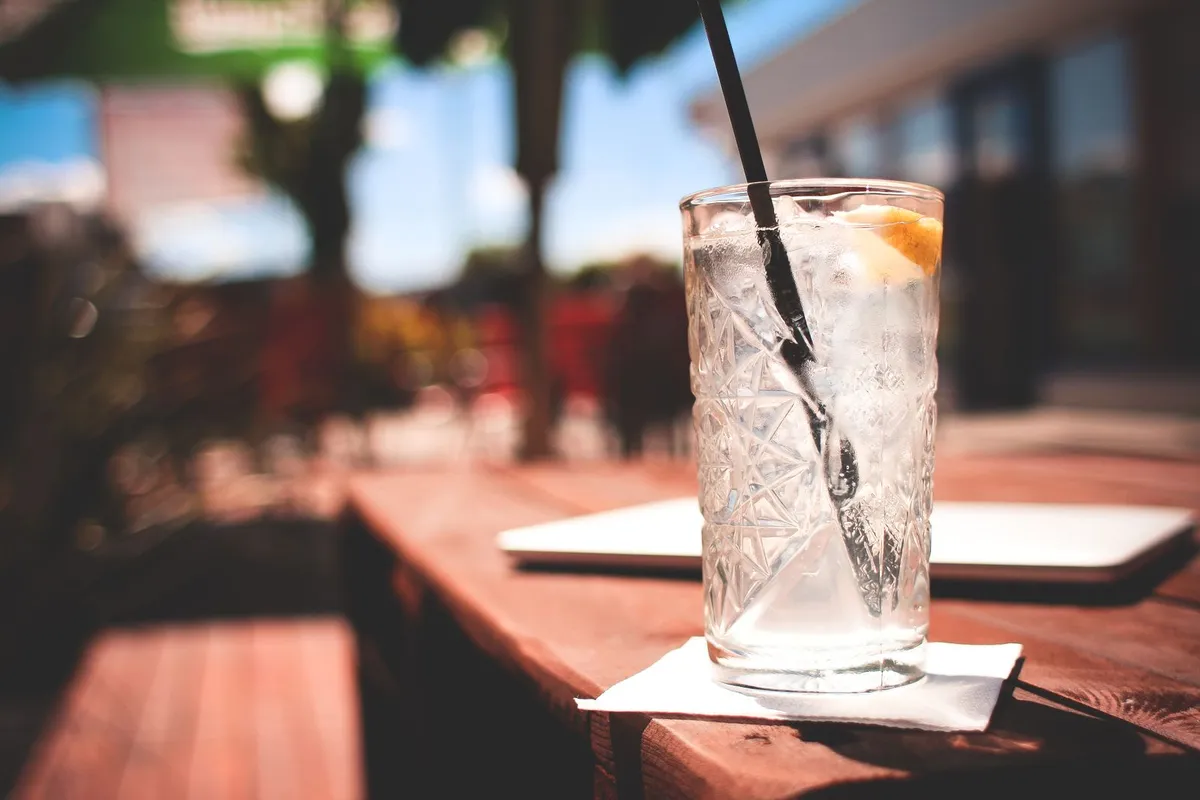
The base number
A standard gin and tonic lands near 150 calories: about 97 from a single US measure of gin (1.5 fl oz at 40% ABV) and about 50 from a normal pour of regular tonic. Gin has no sugar and no carbs, so every calorie in the spirit is pure alcohol at 7 kcal per gram. That is why gin is one of the leanest spirits on the shelf, and why the mixer, not the gin, is usually where a light drink turns heavy.
Single, double, slimline: the full ledger
- Single gin + slimline tonic: ~100 kcal. Slimline tonic is close to zero calories, so you are basically drinking the gin. This is the leanest way to have a real G and T.
- Single gin + regular tonic: ~150 kcal. The everyday pour. Regular tonic adds roughly 34 kcal and 8 g of sugar per 100 ml, so a 150 ml splash is about 50 kcal on top of the gin.
- Double gin + regular tonic (full can): ~260 kcal. Two measures of gin (~195) plus a 200 ml can of tonic (~70). This is closer to a dessert than a diet drink.
- UK single (25 ml) + slimline: ~55 kcal. UK bar measures are smaller than US ones, so a UK single G and T with slimline is genuinely light.
The pattern: the gin barely moves. What moves the number is the pour size and the tonic. Regular to slimline tonic saves about 50 calories and 8 g of sugar per glass and costs you nothing in flavour. A double instead of a single is where the round quietly doubles.
Why alcohol calories are the sneaky kind
Alcohol is 7 calories per gram, almost as calorie-dense as fat, and it arrives with next to no fullness. A 150 kcal snack takes the edge off hunger; a 150 kcal drink does not, so it stacks on top of dinner rather than in place of it. Your body also parks fat burning while it clears the alcohol first. None of that makes a gin and tonic off-limits in a calorie deficit. It just means the drinks have to be counted like food, because that is exactly how they land.
The morning-after scale spike
Step on the scale after a few G and Ts and it often reads up a pound or two. That is not fat, it is mostly water and the salt from the snacks that came with the drinks. Alcohol messes with the hormone that controls water balance, so the bounce clears in a day or two. If you want the full picture on why the number jumps around, we wrote a guide on weight fluctuation that covers exactly this.
Counting drinks the lazy way
Drinks are the most under-logged calories there are, because nobody wants to do spirit math at a bar. Calfit's photo scanner reads the glass the same way it reads a plate: point it at the gin and tonic, get an estimate, tap once to set single or double, and it is logged before the ice melts. Pip does not judge the round. Pip just wants it counted honestly, which is rather the whole point.